What is the difference between abstract class and interface in C#?
Explanation:
An abstract class and an interface both support abstraction, but they serve different design purposes. An abstract class can contain fields, constructors, implemented methods, abstract members, and shared behavior. It is useful when closely related classes need common functionality. An interface primarily defines a contract that implementing types agree to follow. A class can implement multiple interfaces, while C# supports single class inheritance. Modern C# interfaces can also contain default implementations and other supported members. In practice, abstract classes are useful for shared state or behavior, whereas interfaces are commonly used for contracts, loose coupling, dependency injection, and testable architecture.
NEW









NCERT Class 10 Science: Chemical Reactions and Equations – Notes, Questions and Answers
NEW
Quantum Physics for Beginners: A Simple Guide to Key Concepts, Examples and Applications
NEW
Top 20 Social Bookmarking Websites with High DA, PA and Low Spam Score
NEW
CBSE 2027 Exam Timetable Updates: Class 10 & 12 Date Sheet
NEW
Chemical Reactions and Equations Class 10 Important Questions and Answers
NEW
NCERT Solutions for Class 10 Science – Chapter-Wise Guide and Exam Preparation
NEW
SSC Exam Preparation: Complete Guide for Beginners
NEW
RRB Group D Answer Key 2026 Out: Check Response Sheet & Objection
NEW
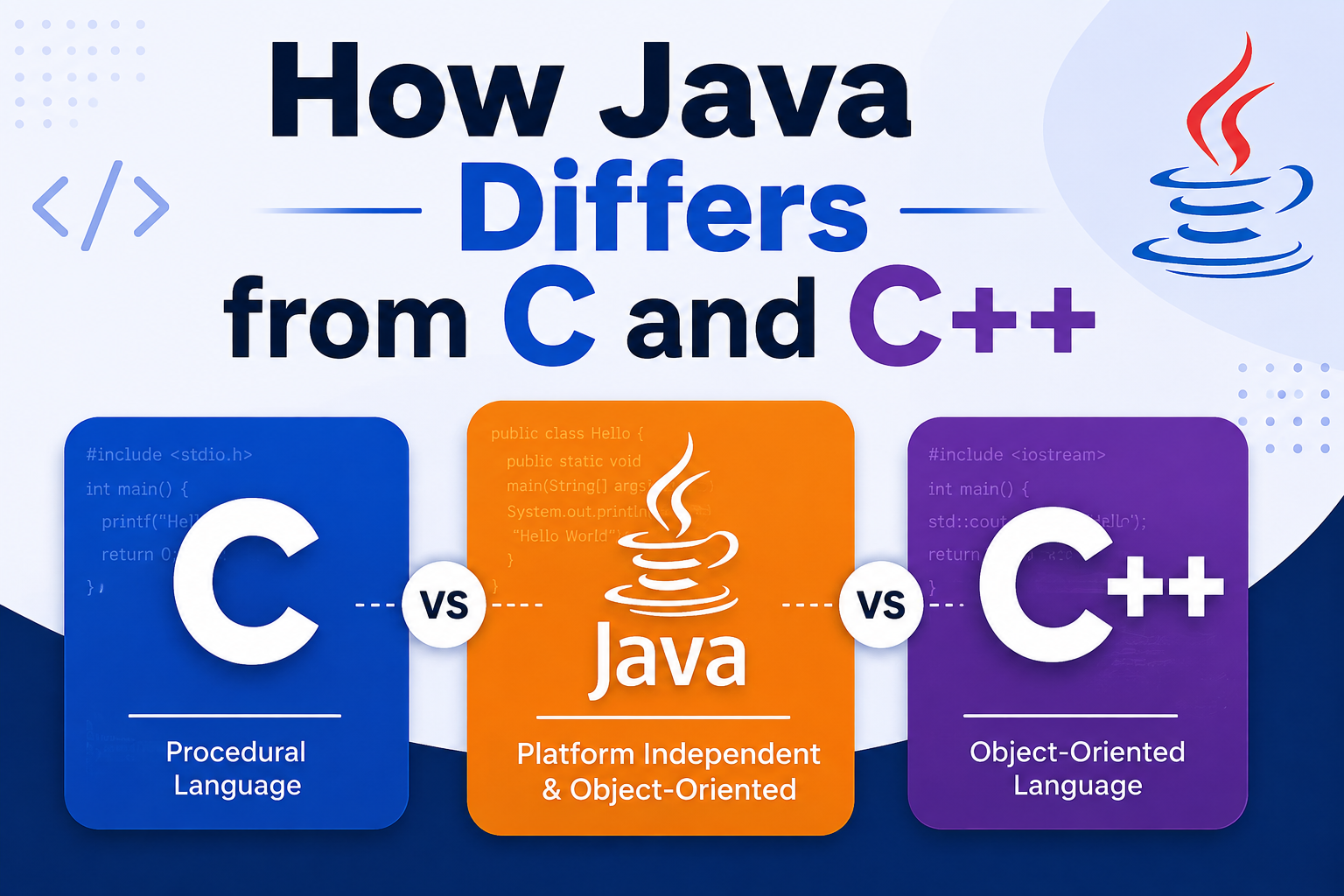
How Java Differs from C and C++
NEW
RRB Group D CBT-1 Exam Date 2026 Out: Check Exam Schedule, Vacancy, Eligibility & Latest Updates
NEW
SSC CHSL Tier 1 Syllabus 2026
NEW