Data Structures MCQ
Data Structures MCQ Questions are designed to help you test and improve your understanding of key data structures and algorithms. These questions cover essential topics such as arrays, linked lists, stacks, queues, trees, graphs, and sorting algorithms. Whether you're a beginner, a student, or an experienced developer, these MCQs offer a great way to assess your knowledge and strengthen your problem-solving skills. Perfect for exam preparation, interviews, or enhancing your data structures knowledge, these questions will guide you in mastering the fundamentals of data structures and algorithms.
Q1. Which data structure uses FIFO (First In First Out) principle?
Correct Answer: B
Q2. Which of the following is a LIFO (Last In First Out) data structure?
Correct Answer: B
Q3. Which data structure is best for implementing recursion?
Correct Answer: B
Q4. Which traversal is used in Binary Search Tree to get data in sorted order?
Correct Answer: B
Q5. Which of the following is not a linear data structure?
Correct Answer: C
Q6. Which data structure is used for implementing BFS (Breadth First Search)?
Correct Answer: B
Q7. Which data structure is used for implementing DFS (Depth First Search)?
Correct Answer: B
Q8. What is the worst-case time complexity of QuickSort?
Correct Answer: B
Q9. Which of the following is an application of stack?
Correct Answer: D
Q10. Which data structure is used for implementing priority queue?
Correct Answer: B
Q11. Which hashing technique resolves collision by storing multiple elements in the same bucket?
Correct Answer: A
Q12. Which of the following is not a self-balancing binary search tree?
Correct Answer: D
Q13. In a circular queue of size n, how many elements can be inserted?
Correct Answer: B
Q14. Which of the following is the fastest data structure for searching?
Correct Answer: B
Q15. Which of the following sorting algorithms is stable?
Correct Answer: C
Q16. Which tree is used in database indexing?
Correct Answer: C
Q17. Which data structure is used for backtracking algorithms?
Correct Answer: B
Q18. Which traversal technique visits root node first, then left subtree, then right subtree?
Correct Answer: A
Q19. What is the height of a complete binary tree with n nodes?
Correct Answer: B
Q20. Which operation is not allowed in a Queue?
Correct Answer: C
Correct Answer: A
Q22. Which data structure follows LIFO principle?
Correct Answer: B
Q23. Which data structure follows FIFO principle?
Correct Answer: C
Q24. What is the time complexity of binary search?
Correct Answer: B
Q25. Which data structure is used for recursion?
Correct Answer: B
Correct Answer: A
Q27. Difference between array and linked list?
Correct Answer: B
Q28. Which data structure is best for searching?
Correct Answer: B
Correct Answer: A
Q30. What is a binary search tree?
Correct Answer: A
Q31. Which traversal uses Root-Left-Right?
Correct Answer: B
Q32. Which traversal uses Left-Root-Right?
Correct Answer: A
Q33. Which traversal uses Left-Right-Root?
Correct Answer: C
Correct Answer: B
Correct Answer: B
Q36. Which data structure uses hashing?
Correct Answer: B
Correct Answer: A
Correct Answer: B
Q39. Which structure is used in BFS?
Correct Answer: B
Q40. Which structure is used in DFS?
Correct Answer: B
Latest Blogs

CBSE 2027 Exam Timetable Updates: Class 10 & 12 Date Sheet
NEW
Chemical Reactions and Equations Class 10 Important Questions and Answers
NEW
NCERT Solutions for Class 10 Science – Chapter-Wise Guide and Exam Preparation
NEW
SSC Exam Preparation: Complete Guide for Beginners
NEW
RRB Group D Answer Key 2026 Out: Check Response Sheet & Objection
NEW
How Java Differs from C and C++
NEW
RRB Group D CBT-1 Exam Date 2026 Out: Check Exam Schedule, Vacancy, Eligibility & Latest Updates
NEW
SSC CHSL Tier 1 Syllabus 2026
NEW
AngularJS Interview Questions and Answers
NEW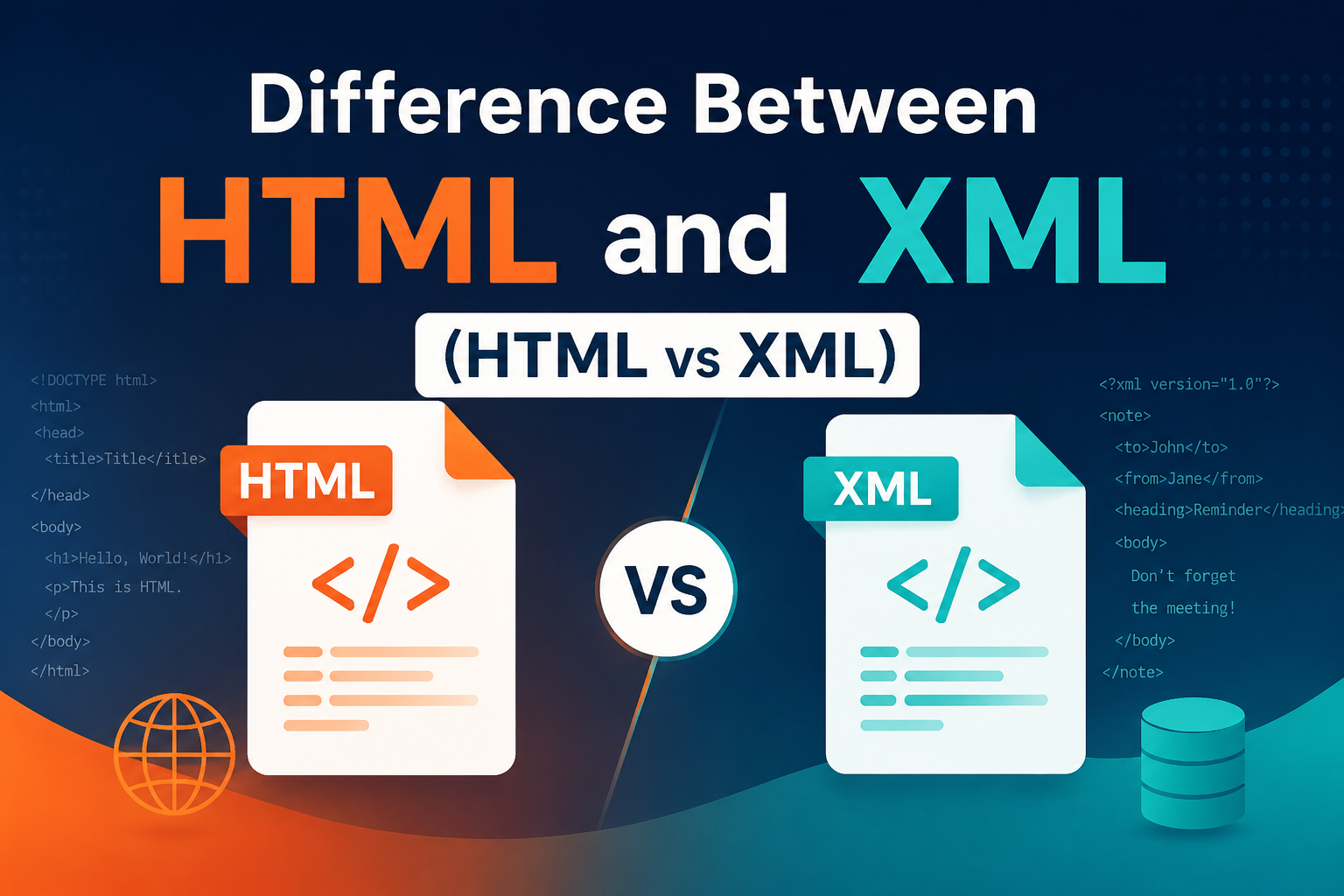
Difference Between HTML and XML (HTML vs XML)
NEW
CBSE 12th Result 2026 Re-Evaluation: Apply Online, Fees, Last Date & Step-by-Step Process Explained
NEW