Network Theory MCQ - Page 2
Network Theory is an important subject in Electronics and Communication Engineering that deals with the analysis and understanding of electrical circuits and networks. It covers concepts such as voltage, current, impedance, circuit laws, network theorems, AC/DC circuit analysis, resonance, transient response, and two-port networks. A strong understanding of Network Theory is essential for solving circuit-related problems and preparing for various ECE competitive and academic examinations.
Practice Network Theory MCQs covering network theorems, circuit analysis, AC/DC circuits, transient analysis, two-port networks, resonance, and other important topics for ECE exams.
Q41. What is a short circuit in network theory?
Correct Answer: A
Q42. Which of the following is used in network theory to analyze circuits with multiple voltage sources?
Correct Answer: C
Q43. What is the characteristic feature of a low-pass filter?
Correct Answer: A
Q44. What is the phase relationship between current and voltage in a purely capacitive AC circuit?
Correct Answer: A
Q45. What is the purpose of network synthesis in network theory?
Correct Answer: A
Q46. What is the effect of inductance in an AC circuit?
Correct Answer: A
Latest Blogs

NCERT Class 10 Science: Chemical Reactions and Equations – Notes, Questions and Answers
NEW
Quantum Physics for Beginners: A Simple Guide to Key Concepts, Examples and Applications
NEW
Top 20 Social Bookmarking Websites with High DA, PA and Low Spam Score
NEW
CBSE 2027 Exam Timetable Updates: Class 10 & 12 Date Sheet
NEW
Chemical Reactions and Equations Class 10 Important Questions and Answers
NEW
NCERT Solutions for Class 10 Science – Chapter-Wise Guide and Exam Preparation
NEW
SSC Exam Preparation: Complete Guide for Beginners
NEW
RRB Group D Answer Key 2026 Out: Check Response Sheet & Objection
NEW
How Java Differs from C and C++
NEW
RRB Group D CBT-1 Exam Date 2026 Out: Check Exam Schedule, Vacancy, Eligibility & Latest Updates
NEW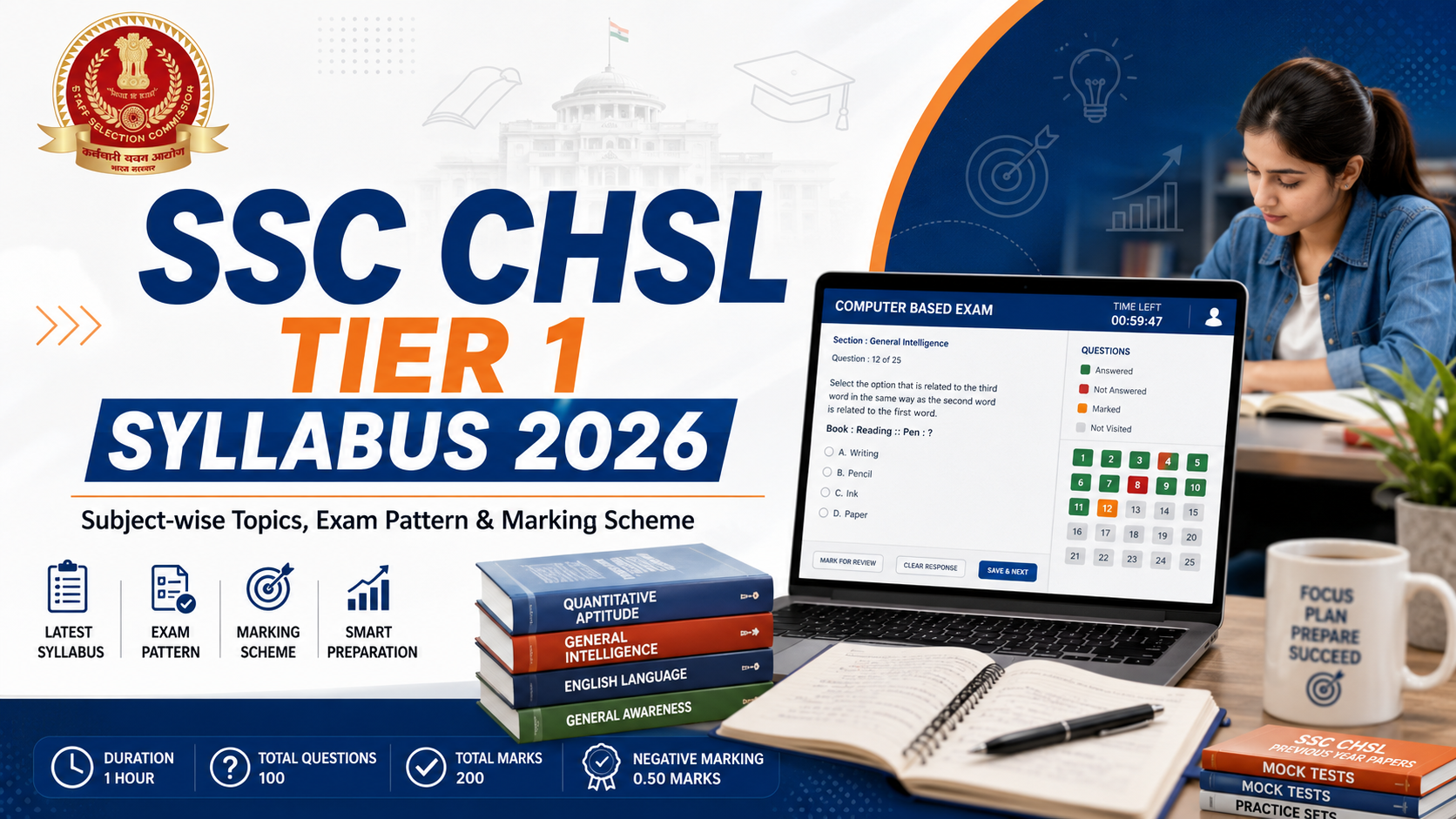
SSC CHSL Tier 1 Syllabus 2026
NEW