SSC JE Electrical Engineering MCQs
SSC JE Electrical Engineering (EE) MCQs are an essential part of preparation for candidates appearing in the Junior Engineer examination conducted by the Staff Selection Commission. These multiple choice questions help aspirants strengthen their technical knowledge, improve accuracy, and understand the exam pattern in a structured way.
The SSC JE EE exam mainly focuses on core electrical engineering subjects along with general awareness, reasoning ability, and quantitative aptitude. The technical section plays a major role in selection, so regular practice of MCQs is very important for success.
Electrical Engineering MCQs generally cover topics such as electrical circuits, network theory, electromagnetic fields, machines, power systems, control systems, measurements, and electrical instrumentation. Candidates are expected to have a strong understanding of both theoretical concepts and practical applications.
Practicing SSC JE EE MCQs helps candidates improve speed and accuracy in solving numerical and concept-based problems. Since the exam is time-bound, efficient problem-solving is necessary to complete the paper within the given duration. Continuous practice also helps in identifying important and frequently asked topics.
Apart from technical subjects, the exam also includes general awareness, reasoning, and quantitative aptitude. General awareness covers current affairs, Indian history, geography, polity, and basic science. Reasoning questions test logical thinking and analytical ability, while quantitative aptitude includes topics like percentage, ratio, time and work, and data interpretation.
To prepare effectively for SSC JE Electrical Engineering MCQs, candidates should follow a structured study plan. This includes daily MCQ practice, revision of formulas and concepts, and regular mock tests. Understanding basic electrical principles is very important before attempting advanced-level questions.
Previous year question papers are highly useful for understanding exam trends and difficulty levels. They help candidates focus on important topics and improve their preparation strategy accordingly.
Mock tests play a crucial role in preparation as they simulate real exam conditions and improve time management skills. After each test, analyzing mistakes is essential for continuous improvement and better performance in the final exam.
Consistency is the key to success in SSC JE EE exams. Candidates should dedicate fixed study hours daily for both technical and non-technical subjects. Breaking the syllabus into smaller sections makes preparation more manageable and effective.
Understanding the syllabus is the first step in preparation. It allows candidates to prioritize important topics such as circuit theory, machines, and power systems while maintaining balance with other sections.
In conclusion, SSC JE Electrical Engineering MCQs are a powerful tool for exam preparation. With regular practice, strong conceptual clarity, and proper planning, candidates can significantly improve their performance. A disciplined approach that includes mock tests, revision, and topic-wise study increases the chances of success in SSC JE EE recruitment exams. Staying consistent and focused is essential for achieving a successful engineering career in the government sector.
Q1. Ohm law relates which electrical quantities?
📘 View ExplanationQ2. The SI unit of electrical resistance is?
📘 View ExplanationQ3. Kirchhoff current law is based on conservation of?
📘 View ExplanationQ4. Kirchhoff voltage law is based on conservation of?
📘 View ExplanationQ5. The reciprocal of resistance is called?
📘 View ExplanationQ6. The SI unit of capacitance is?
📘 View ExplanationQ7. The SI unit of inductance is?
📘 View ExplanationQ8. In a purely inductive AC circuit, current lags voltage by?
📘 View ExplanationQ9. In a purely capacitive AC circuit, current leads voltage by?
📘 View ExplanationQ10. Power factor of a pure resistive circuit is?
📘 View ExplanationQ11. The unit of electrical energy commonly used in electricity bills is?
📘 View ExplanationQ12. One kilowatt hour is equal to?
📘 View ExplanationQ13. Which theorem is used to replace a complex network by a single voltage source and series resistance?
📘 View ExplanationQ14. Which theorem is used to replace a complex network by a current source and parallel resistance?
📘 View ExplanationQ15. Maximum power transfer occurs when load resistance is equal to?
📘 View ExplanationQ16. Transformer works on the principle of?
📘 View ExplanationQ17. A transformer is used to change?
📘 View ExplanationQ18. The core of a transformer is laminated to reduce?
📘 View ExplanationQ19. The main function of transformer oil is?
📘 View ExplanationQ20. Which loss in a transformer is also called iron loss?
📘 View ExplanationQ21. The speed of a DC motor is mainly controlled by varying?
📘 View ExplanationQ22. The function of commutator in a DC machine is to?
📘 View ExplanationQ23. Which DC motor is preferred for electric traction?
📘 View ExplanationQ24. The speed of a synchronous motor is given by?
📘 View ExplanationQ25. Slip in an induction motor is zero at?
📘 View ExplanationQ26. At starting, slip of a three phase induction motor is?
📘 View ExplanationQ27. Which starter is commonly used for small induction motors?
📘 View ExplanationQ28. Star delta starter is used to reduce?
📘 View ExplanationQ29. Which device protects an electrical circuit from overcurrent?
📘 View ExplanationQ30. MCB stands for?
📘 View ExplanationQ31. The main function of a circuit breaker is to?
📘 View ExplanationQ32. Which relay is commonly used for protection against excessive current?
📘 View ExplanationQ33. Buchholz relay is used for protection of?
📘 View ExplanationQ34. The power factor can be improved by using?
📘 View ExplanationQ35. Which instrument is used to measure electrical power?
📘 View ExplanationQ36. Which instrument is used to measure insulation resistance?
📘 View ExplanationQ37. Moving iron instruments can be used for?
📘 View ExplanationQ38. PMMC instrument is suitable for measuring?
📘 View ExplanationQ39. The SI unit of magnetic flux is?
📘 View ExplanationQ40. The SI unit of magnetic flux density is?
📘 View Explanation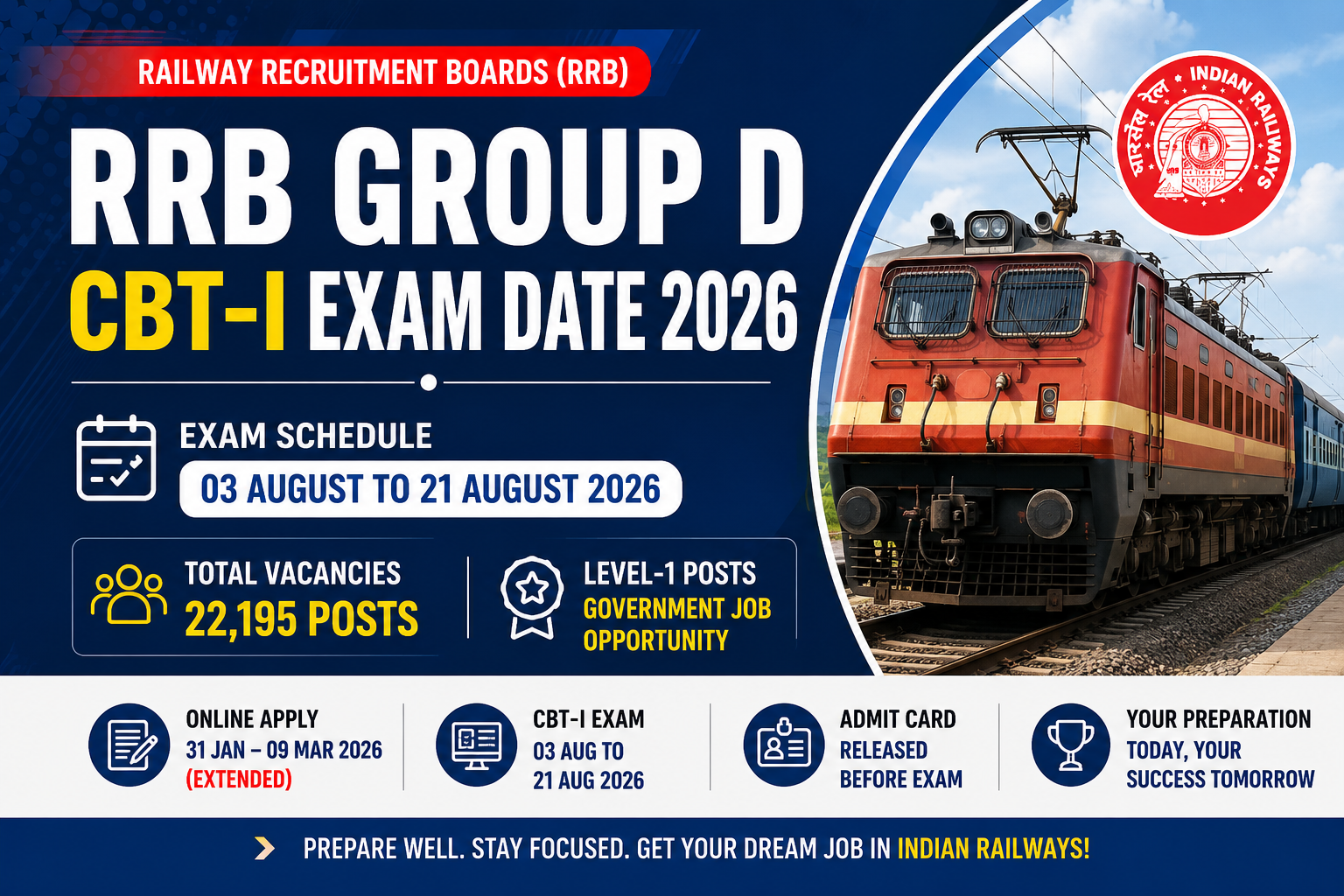
RRB Group D CBT-1 Exam Date 2026 Out: Check Exam Schedule, Vacancy, Eligibility & Latest Updates
NEW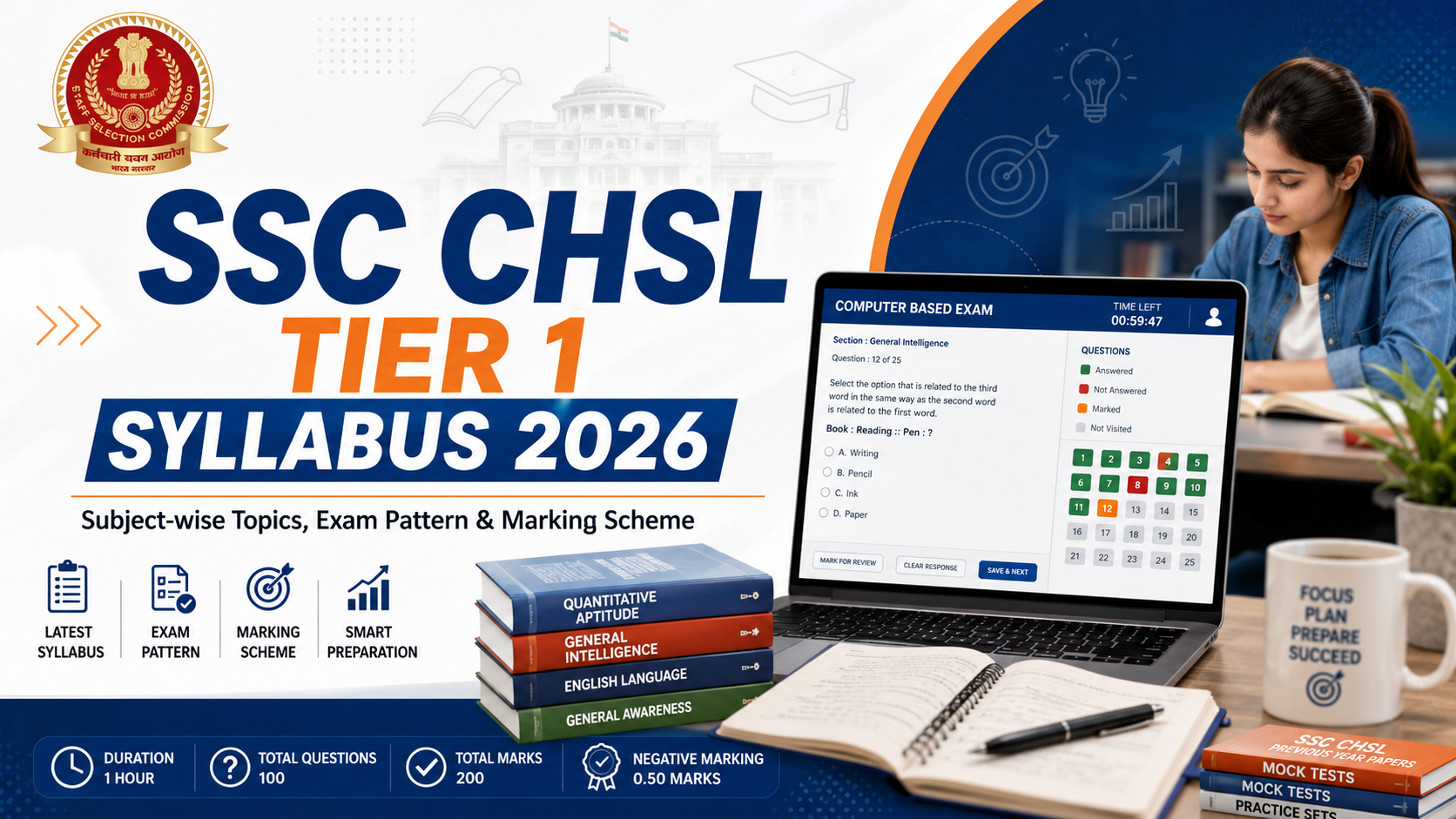
SSC CHSL Tier 1 Syllabus 2026
NEW
AngularJS Interview Questions and Answers
NEW
Difference Between HTML and XML (HTML vs XML)
NEW
CBSE 12th Result 2026 Re-Evaluation: Apply Online, Fees, Last Date & Step-by-Step Process Explained
NEW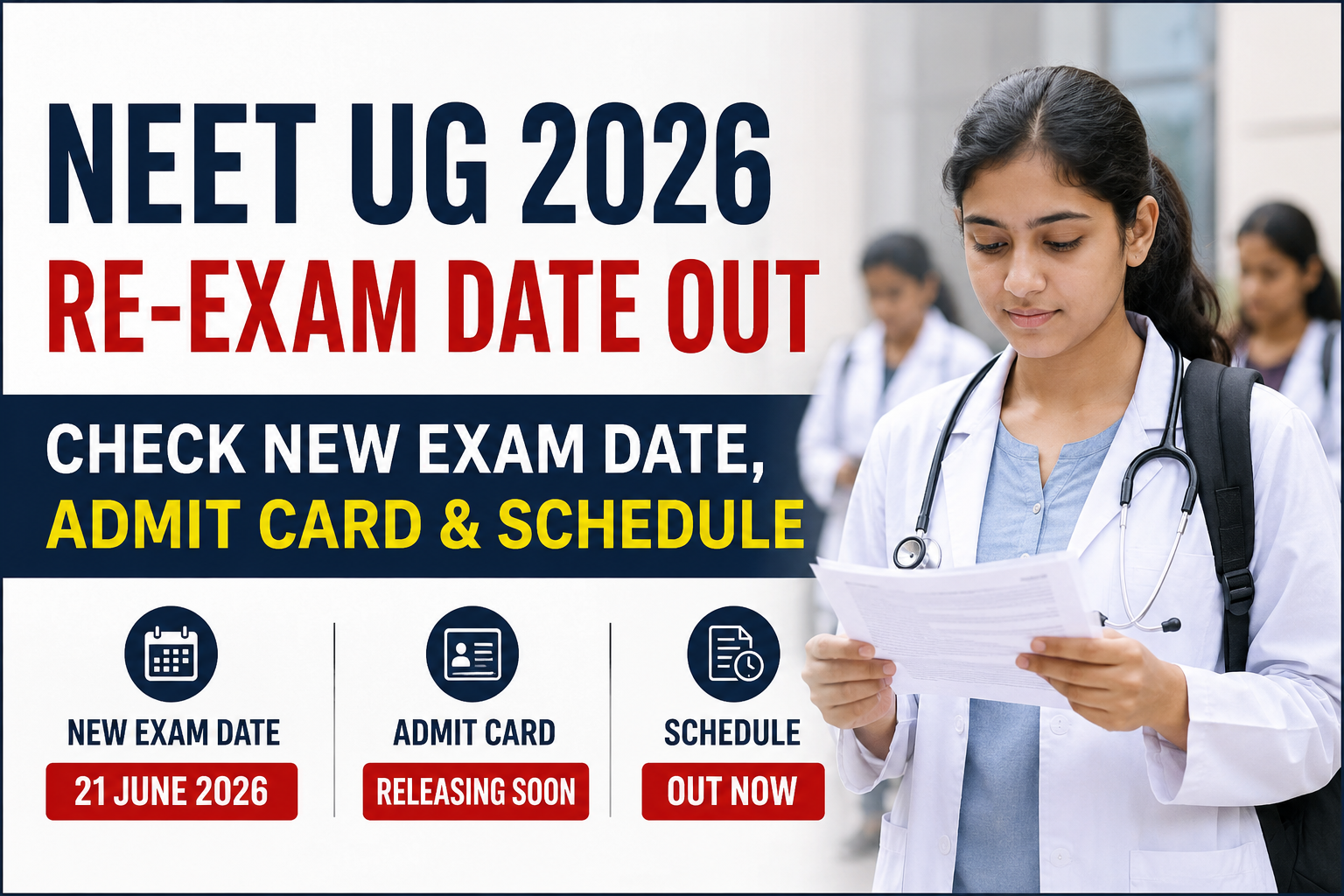
NEET UG 2026 Re-Exam Date Announced: Check New Exam Date, Schedule & Latest Updates
NEW
Understanding the SSC Phase 14 Exam: A Comprehensive Overview
NEW
Top Study Tips for Cracking Your Exams with Confidence
NEW
Aerospace Engineering: Scope, Courses & Career Opportunities
NEW
SSC CHSL Syllabus
NEW
EPFO 3.0 is Here: 7 Major Changes Every Employee Must Know
NEW