SSC JE Mechanical Engineering MCQs
SSC JE Mechanical Engineering (ME) MCQs are an important part of preparation for candidates appearing in the Junior Engineer examination conducted by the Staff Selection Commission. These multiple choice questions help aspirants strengthen their technical concepts, improve problem-solving speed, and understand the exam pattern in a structured way.
The SSC JE ME exam consists of two main parts: technical mechanical engineering subjects and general awareness, reasoning, and quantitative aptitude. The technical section carries significant weight, so strong preparation through MCQs is essential for success.
Mechanical Engineering MCQs generally include topics such as engineering mechanics, strength of materials, thermodynamics, fluid mechanics, machine design, production engineering, refrigeration and air conditioning, and industrial engineering. Candidates must focus on both theoretical concepts and numerical problem-solving skills.
Practicing SSC JE ME MCQs regularly helps candidates improve accuracy and speed, which are crucial in a time-bound competitive exam. It also helps in identifying important topics that are frequently asked in previous examinations. Continuous practice builds confidence and reduces exam stress.
Apart from technical subjects, the exam also includes general awareness, reasoning ability, and quantitative aptitude. General awareness covers current affairs, Indian history, geography, polity, and basic science. Reasoning questions test logical thinking and analytical ability, while quantitative aptitude includes arithmetic topics such as percentage, ratio, time and work, and data interpretation.
To prepare effectively for SSC JE Mechanical Engineering MCQs, candidates should follow a structured study plan that includes daily MCQ practice, revision of formulas, and regular mock tests. Understanding basic mechanical concepts is essential before moving to advanced-level problems.
Previous year question papers are highly useful for understanding exam trends and frequently asked topics. They help candidates prioritize important areas and improve their preparation strategy accordingly.
Mock tests play a crucial role in preparation by simulating real exam conditions. They help candidates manage time effectively and identify weak areas. After each test, analyzing mistakes is necessary for continuous improvement and better performance in the final exam.
Consistency is the key to success in SSC JE ME exams. Candidates should dedicate fixed study hours daily for technical and non-technical subjects. Breaking the syllabus into smaller sections makes preparation easier and more effective.
Understanding the syllabus is the first step in preparation. It allows candidates to focus on high-weight topics such as thermodynamics, strength of materials, and fluid mechanics while maintaining balance with other sections.
In conclusion, SSC JE Mechanical Engineering MCQs are a powerful tool for exam preparation. With regular practice, strong conceptual clarity, and proper planning, candidates can significantly improve their performance. A disciplined approach that includes mock tests, revision, and topic-wise study increases the chances of success in SSC JE ME recruitment exams. Staying consistent and focused is essential for achieving a successful engineering career in the government sector.
Q1. Which law of thermodynamics forms the basis of temperature measurement?
📘 View ExplanationQ2. The first law of thermodynamics is based on which principle?
📘 View ExplanationQ3. The efficiency of a Carnot engine depends on which factor?
📘 View ExplanationQ4. Which cycle is used as the ideal cycle for spark ignition engines?
📘 View ExplanationQ5. Which cycle is used as the ideal cycle for compression ignition engines?
📘 View ExplanationQ6. Which cycle is commonly used in steam power plants?
📘 View ExplanationQ7. Which cycle is used in gas turbine power plants?
📘 View ExplanationQ8. The SI unit of entropy is?
📘 View ExplanationQ9. Which device converts heat energy into mechanical work?
📘 View ExplanationQ10. In a refrigerator, heat is transferred from?
📘 View ExplanationQ11. Reynolds number is the ratio of which forces?
📘 View ExplanationQ12. The SI unit of dynamic viscosity is?
📘 View ExplanationQ13. Bernoulli equation is based on conservation of?
📘 View ExplanationQ14. Which instrument is used to measure fluid pressure?
📘 View ExplanationQ15. Which turbine is an impulse turbine?
📘 View ExplanationQ16. Which turbine is suitable for low head and high discharge?
📘 View ExplanationQ17. Draft tube is used in which type of turbine?
📘 View ExplanationQ18. Cavitation in hydraulic machines occurs due to?
📘 View ExplanationQ19. Hooke law is valid up to which limit?
📘 View ExplanationQ20. Young modulus is defined as the ratio of?
📘 View ExplanationQ21. Poisson ratio is the ratio of?
📘 View ExplanationQ22. The bending equation is written as?
📘 View ExplanationQ23. The torsion equation for a circular shaft is?
📘 View ExplanationQ24. For a simply supported beam with central point load W, maximum bending moment is?
📘 View ExplanationQ25. For a cantilever beam with point load W at free end, maximum bending moment is?
📘 View ExplanationQ26. Which material property measures resistance to indentation?
📘 View ExplanationQ27. Which property allows a material to be drawn into wires?
📘 View ExplanationQ28. Which property allows a material to absorb energy before fracture?
📘 View ExplanationQ29. Cast iron contains carbon approximately in which range?
📘 View ExplanationQ30. Which heat treatment process increases hardness of steel?
📘 View ExplanationQ31. Which manufacturing process is used to produce external threads?
📘 View ExplanationQ32. Which operation enlarges an existing drilled hole accurately?
📘 View ExplanationQ33. Which welding process uses a non-consumable tungsten electrode?
📘 View ExplanationQ34. Which casting defect is caused by trapped gases?
📘 View ExplanationQ35. Which machine tool is mainly used for producing cylindrical surfaces?
📘 View ExplanationQ36. In a four-stroke engine, one power stroke occurs in how many crankshaft revolutions?
📘 View ExplanationQ37. In a two-stroke engine, one power stroke occurs in how many crankshaft revolutions?
📘 View ExplanationQ38. The function of a carburettor in a petrol engine is to?
📘 View ExplanationQ39. Which component in an IC engine converts reciprocating motion into rotary motion?
📘 View ExplanationQ40. Which device is used to measure brake power of an engine?
📘 View Explanation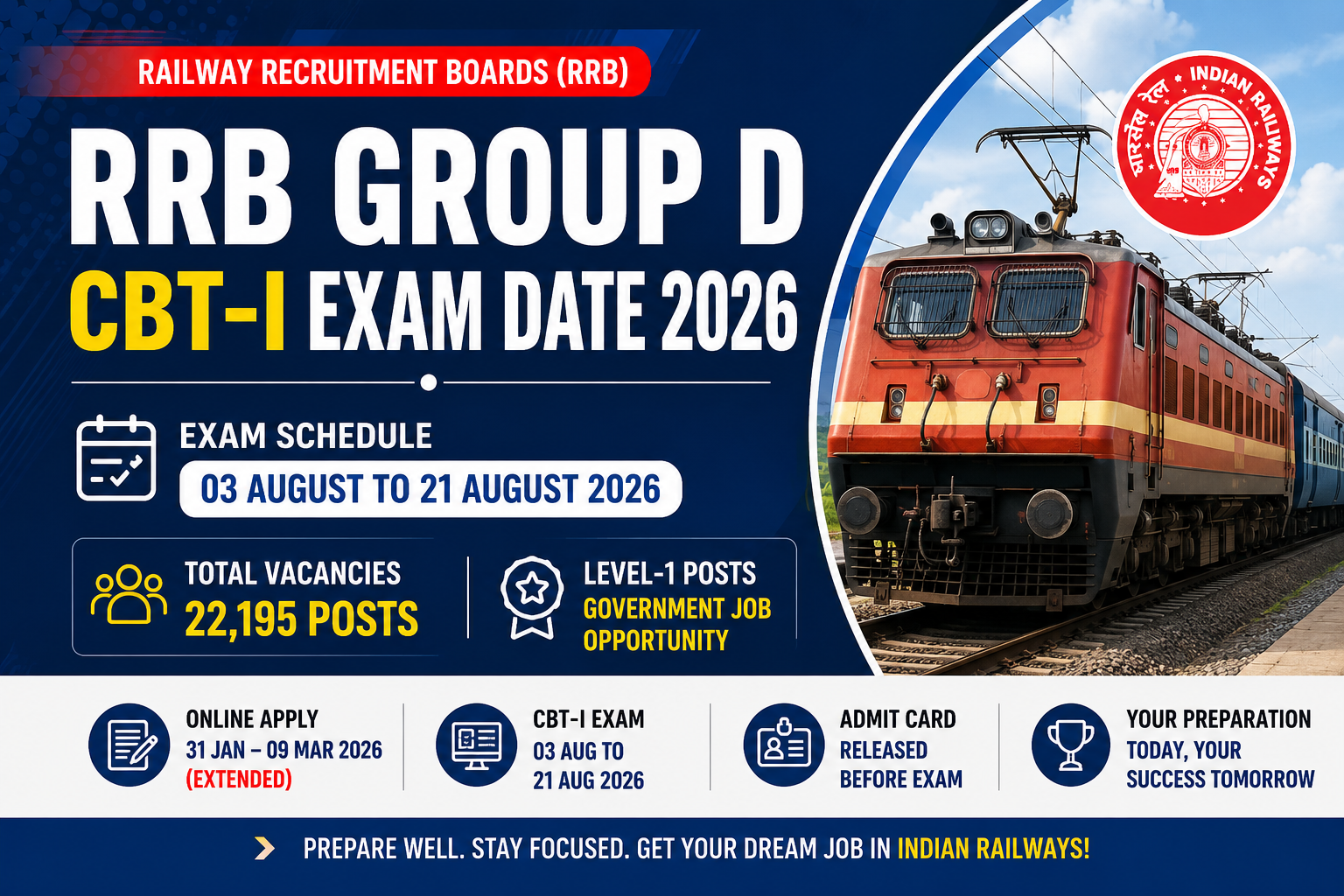
RRB Group D CBT-1 Exam Date 2026 Out: Check Exam Schedule, Vacancy, Eligibility & Latest Updates
NEW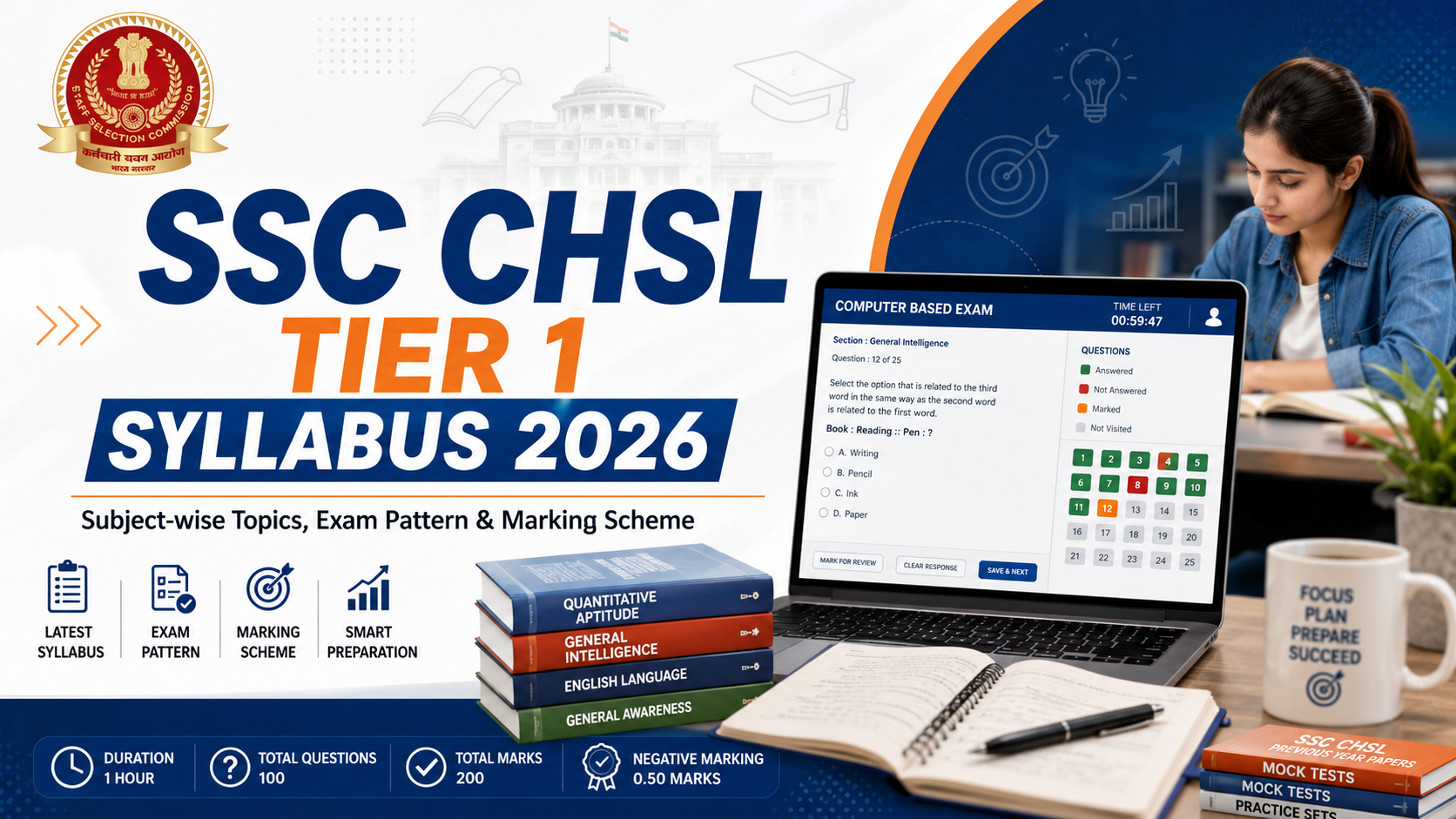
SSC CHSL Tier 1 Syllabus 2026
NEW
AngularJS Interview Questions and Answers
NEW
Difference Between HTML and XML (HTML vs XML)
NEW
CBSE 12th Result 2026 Re-Evaluation: Apply Online, Fees, Last Date & Step-by-Step Process Explained
NEW
NEET UG 2026 Re-Exam Date Announced: Check New Exam Date, Schedule & Latest Updates
NEW
Understanding the SSC Phase 14 Exam: A Comprehensive Overview
NEW
Top Study Tips for Cracking Your Exams with Confidence
NEW
Aerospace Engineering: Scope, Courses & Career Opportunities
NEW
SSC CHSL Syllabus
NEW
EPFO 3.0 is Here: 7 Major Changes Every Employee Must Know
NEW