UPSC Indian Forest Service (IFS) MCQs
Prepare for the UPSC Indian Forest Service (IFS) exam with a focused collection of multiple-choice questions (MCQs). These MCQs cover essential subjects such as General Studies, Forestry, Environmental Science, and Ecology, designed to match the actual exam pattern. Practicing these questions will help aspirants enhance their understanding of forest management, wildlife conservation, and environmental issues. Whether you're revising key concepts or assessing your exam readiness, these IFS MCQs are an invaluable resource to guide you toward success in the UPSC IFS exam and begin a prestigious career in India’s Forest Service.
Q1. Which gas is primarily responsible for the greenhouse effect?
Correct Answer: A
Q2. The term "biodiversity hotspot" refers to an area that:
Correct Answer: C
Q3. Which of the following trees is classified as a conifer?
Correct Answer: B
Q4. What is the main objective of the Forest Conservation Act, 1980?
Correct Answer: B
Q5. Which soil type is commonly found in forested areas?
Correct Answer: C
Q6. The process by which nitrogen is converted into organic compounds by certain bacteria is called:
Correct Answer: C
Q7. Which one of the following is a renewable natural resource?
Correct Answer: C
Q8. Endangered species are those which:
Correct Answer: B
Q9. What does the “Kyoto Protocol” primarily deal with?
Correct Answer: C
Q10. The “Chipko Movement” was related to:
Correct Answer: B
Q11. Which Indian state is known for the Sundarbans mangrove forest?
Correct Answer: A
Q12. The technique of growing different crops in alternate seasons on the same land is called:
Correct Answer: B
Q13. Which has the highest biodiversity?
Correct Answer: A
Q14. What is the major cause of deforestation?
Correct Answer: D
Q15. The term “sustainable development” means:
Correct Answer: C
Q16. In forestry, “silviculture” refers to:
Correct Answer: B
Q17. Which gas is released during photosynthesis?
Correct Answer: A
Q18. Which Indian National Park is famous for the Royal Bengal Tiger?
Correct Answer: C
Q19. The process of gradual transformation of one community into another is called:
Correct Answer: B
Q20. Which soil conservation technique involves the construction of terraces?
Correct Answer: C
Q21. The “Paris Agreement” is related to:
Correct Answer: D
Q22. Which one of the following is NOT a source of renewable energy?
Correct Answer: C
Q23. The “Convention on Biological Diversity” was adopted in:
Correct Answer: A
Q24. Which ecosystem is characterized by a canopy of trees formed by dense vegetation?
Correct Answer: C
Q25. The main component of natural gas is:
Correct Answer: B
Q26. Which soil horizon is richest in organic material?
Correct Answer: A
Q27. Ecological footprint measures:
Correct Answer: C
Q28. The main cause of ozone layer depletion is:
Correct Answer: A
Q29. Which animal is India's national bird?
Correct Answer: A
Q30. Which of the following is considered a greenhouse gas?
Correct Answer: B
Q31. What is the main function of the pancreas?
Correct Answer: B
Q32. Which of these is a hardwood tree?
Correct Answer: A
Q33. Which biome is characterized by very low temperatures and permafrost?
Correct Answer: A
Q34. “Coral reefs” are primarily found in:
Correct Answer: A
Q35. Which vitamin deficiency causes scurvy?
Correct Answer: B
Q36. What is the maximum permissible limit of PM2.5 in ambient air as per WHO?
Correct Answer: A
Q37. Which of the following is NOT part of remote sensing?
Correct Answer: D
Q38. Which Indian state is home to the Kaziranga National Park?
Correct Answer: B
Q39. Which one is NOT an endangered species?
Correct Answer: C
Q40. Which acid rain causes damage to forests?
Correct Answer: A
Latest Blogs

SSC Exam Preparation: Complete Guide for Beginners
NEW
RRB Group D Answer Key 2026 Out: Check Response Sheet & Objection
NEW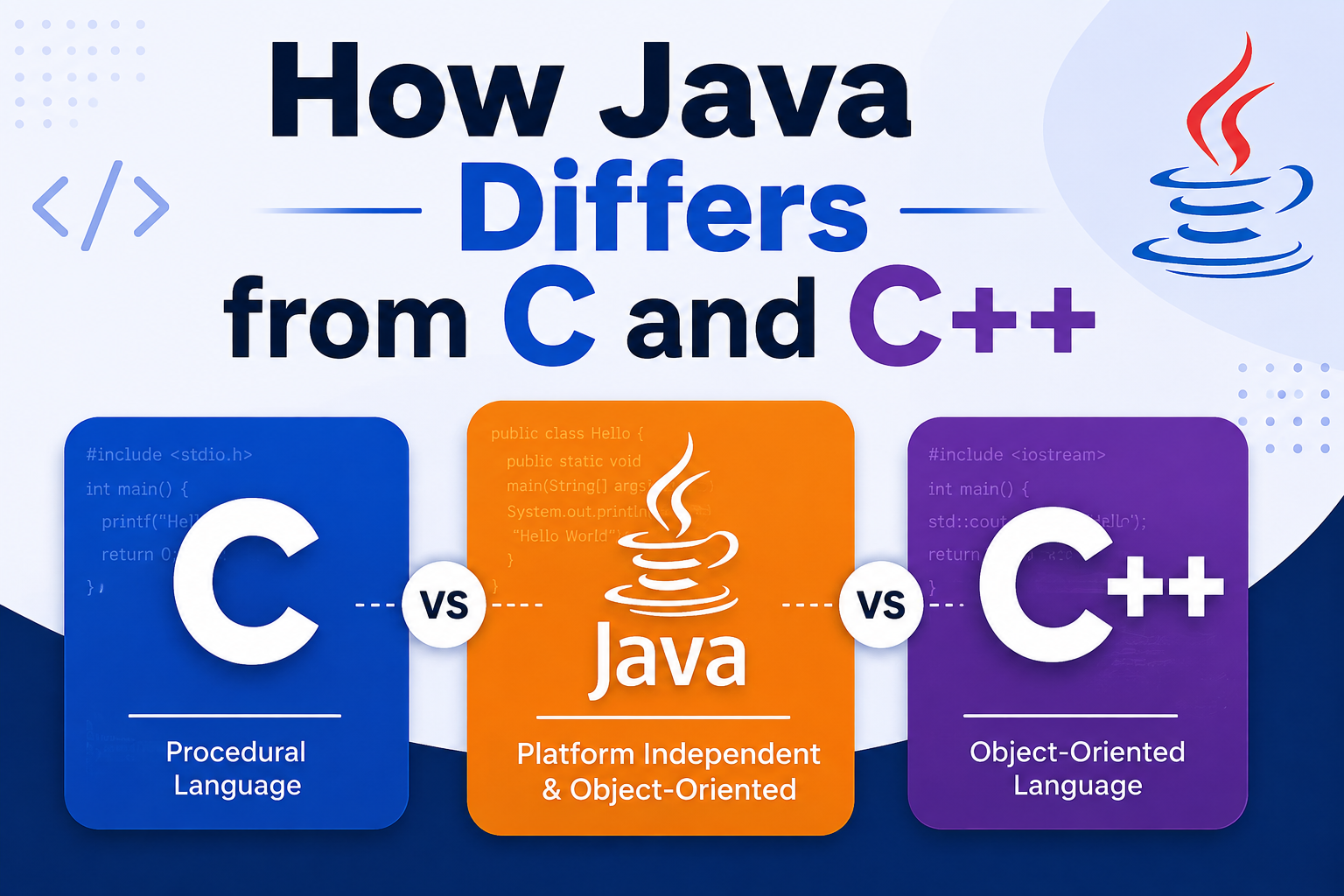
How Java Differs from C and C++
NEW
RRB Group D CBT-1 Exam Date 2026 Out: Check Exam Schedule, Vacancy, Eligibility & Latest Updates
NEW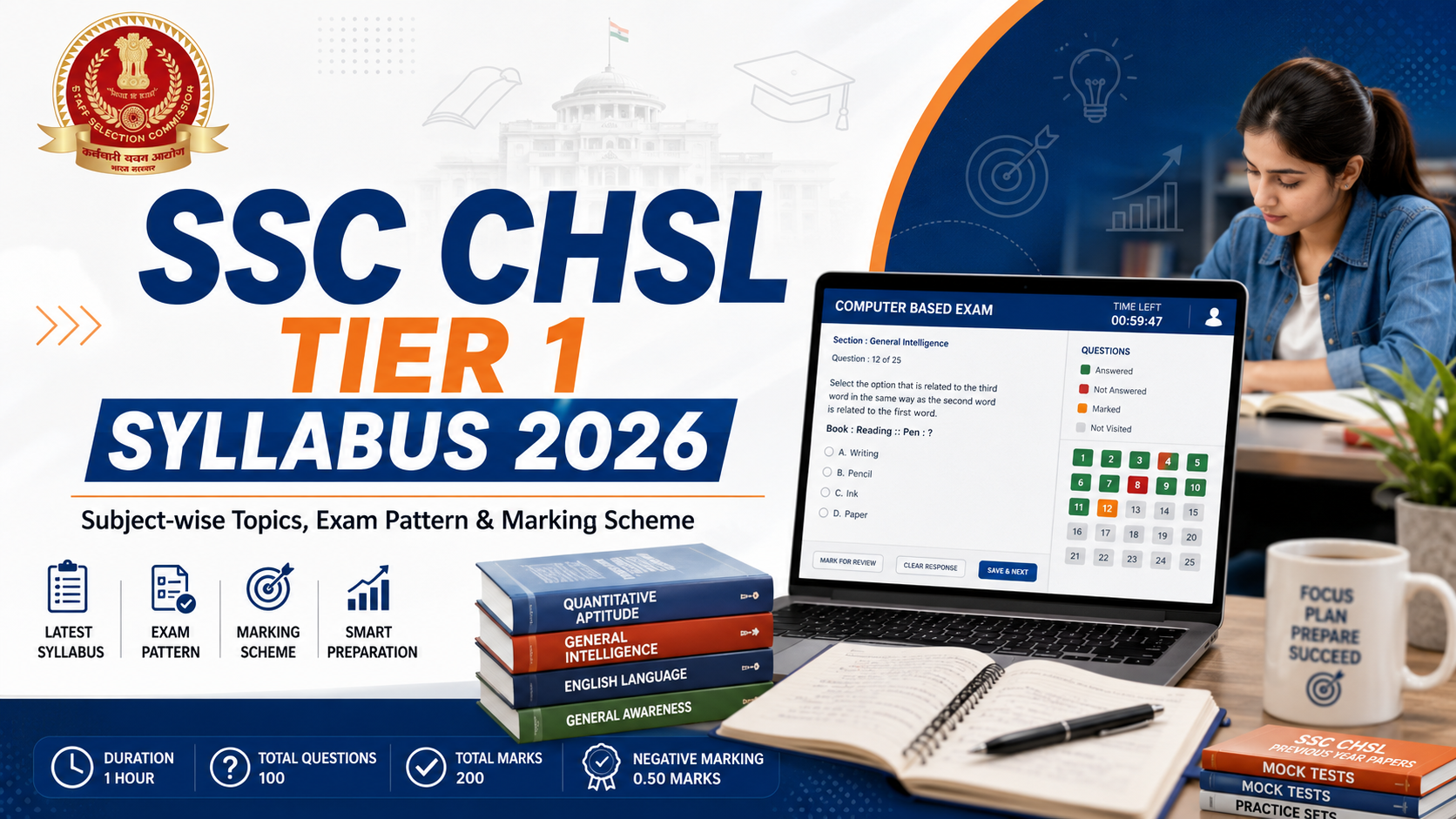
SSC CHSL Tier 1 Syllabus 2026
NEW
AngularJS Interview Questions and Answers
NEW
Difference Between HTML and XML (HTML vs XML)
NEW
CBSE 12th Result 2026 Re-Evaluation: Apply Online, Fees, Last Date & Step-by-Step Process Explained
NEW
NEET UG 2026 Re-Exam Date Announced: Check New Exam Date, Schedule & Latest Updates
NEW
Understanding the SSC Phase 14 Exam: A Comprehensive Overview
NEW
Top Study Tips for Cracking Your Exams with Confidence
NEW